US Constitution Series 2: Quotations from Founding Fathers on Virtue
Dinner Topics for Wednesday
The Founders’ Basic Principles: 28 Great Ideas that changed the world
From The 5,000 Year Leap—A Miracle that Changed the World
By W. Cleon Skousen
“Virtue is not hereditary.” ~Thomas Jefferson
Principle # 2
A free people cannot survive under a republican Constitution unless they remain virtuous and morally strong.
Only a virtuous people are capable of freedom. As nations become corrupt and vicious, they have more need of masters. (Smyth, Writings of Benjamin Franklin, 9:569)
What is “Public Virtue”?
Morality is identified with the Ten Commandments and obedience to the Creator’s mandate for “right conduct,” but the early Americans identified “public virtue” as a very special quality of human maturity in character and service akin to the Golden Rule. (Skousen, 5,000 Year Leap, p.50)
Summary: Americans of that time had doubts about their ability to be good enough to govern themselves. That’s how important they considered public virtue to be. This prevailing attitude caused a widespread movement of reform and revival of moral virtue.
The Moral Reform Accelerated the Revolution
Many Americans became so impressed the improvement in the quality of life as a result of the reform movement that they were afraid they might lose it If they did not hurriedly separate from the corrupting influence of British manners. They attributed this corruption to the monarchial aristocracy of England. (Ibid, p.52)
James Madison:
Is there no virtue among us? If there be not, we are in a wretched situation. No theoretical checks, no form of government, can render us secure. To suppose that any form of government will secure liberty or happiness without any virtue in the people, is a chimerical idea.
“Virtue is not hereditary.” ~Thomas Jefferson
Virtue has to be earned and it has to be learned. Neither is virtue a permanent quality in human nature. It has to be cultivated continually and exercised from hour to hour and from day to day. The Founders looked to the home, the school, and the churches to fuel the fires of virtue from generation to generation. (Ibid, p.54)
George Washington:
And let us with caution indulge the supposition that morality can be maintained without religion. Whatever may be conceded to the influence of refined education …reason and experience both forbid us to expect that national morality can prevail in exclusion of religious principle.
Benjamin Franklin:
I think also, that general virtue is more probably to be expected and obtained from the education of youth, than from the exhortations of adult persons; bad habits and vices of the mind being, like diseases of the body, more easily prevented [in youth] than cured [in adults].
Warning from the Founders
Richard Henry Lee:
I thank God that I have lived to see my country independent and free. She may long enjoy her independence and freedom if she will. It depends on her virtue.
John Adams:
Our Constitution was made only for a moral and religious people. It is wholly inadequate to the government of any other.
Samuel Adams:
The sum of all is, if we would most truly enjoy the gift of Heaven, let us become a virtuous people; then shall we both deserve and enjoy it. While, on the other hand, if we are universally vicious and debauched in our manners, though the form of our Constitution carries the face of the most exalted freedom, we shall in reality be the most abject slaves.
Principle #3: What is the Key to Preserving a Virtuous Nation?
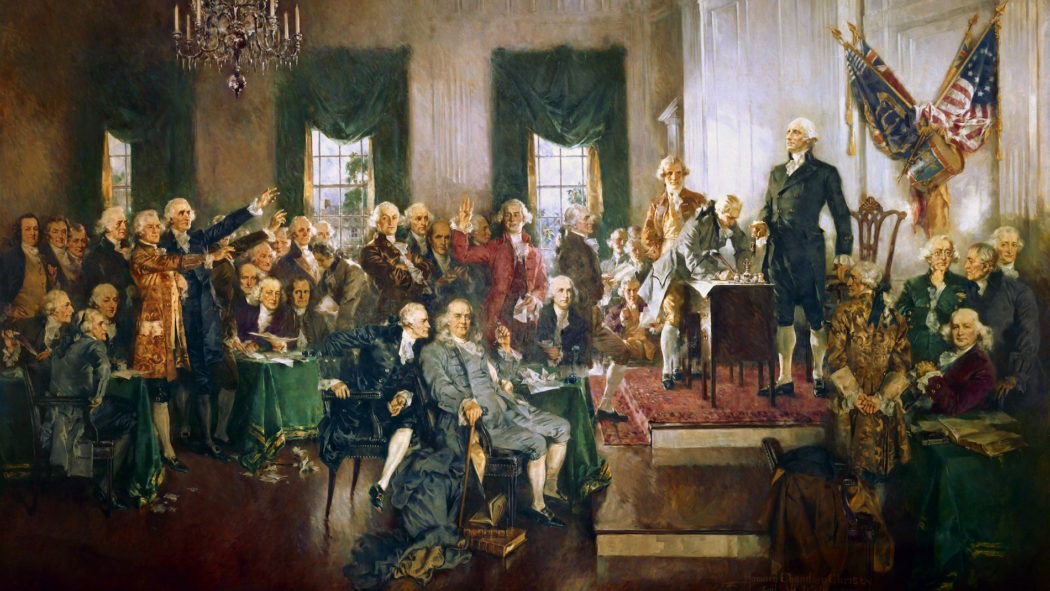
 The Founders’ Basic Principles: 28 Great Ideas that changed the world

 “Virtue is not hereditary.” ~Thomas Jefferson
 George Washington:

One response to “US Constitution Series 2: Quotations from Founding Fathers on Virtue”
Everything is very open with a really clear clarification of
the challenges. It was definitely informative.
Your website is useful. Thanks for sharing!