“Music is a moral law. It gives soul to the universe, wings to the mind, flight to the imagination, and charm and gaiety to life and to everything.” ~Plato
Romanian Rhapsody
Stress Management, Classical Music, and Enesco
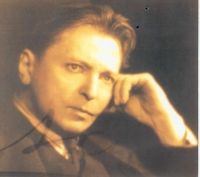
George Enescu known in France as Georges Enesco; 19 August 1881, Liveni – 4 May 1955, Paris) was a Romanian composer, violinist, pianist, conductor and teacher.
Many of Enescu’s works were influenced by Romanian folk music, his most popular compositions being the two Romanian Rhapsodies (1901-2), the opera Œdipe (1936), and the suites for orchestra.[citation needed] He also wrote five symphonies (two of them unfinished), a symphonic poemVox maris, and much chamber music (three sonatas for violin and piano, two for cello and piano, a piano trio, two string quartets and two piano quartets, a wind decet (French, “dixtuor”), an octet for strings, a piano quintet, and a chamber symphony for twelve solo instruments). A young Ravi Shankar recalled in the 1960s how Enescu, who had developed a deep interest in Oriental music, rehearsed with Shankar’s brother Uday Shankar and his musicians. Around the same time, Enescu took the young Yehudi Menuhin to the Colonial Exhibition in Paris, where he introduced him to the Gamelan Orchestra from Indonesia.[


You must be logged in to post a comment.